
Somewhere along the way, we stopped knowing our neighbors. Not on purpose. Life got busy, people moved in and out, and we got comfortable with the idea that living near someone was enough, that proximity was the same as community. It isn’t.
Real community is built on something quieter and more intentional: a name remembered, a door checked on, a conversation that happens not because something went wrong but because someone decided to show up anyway.
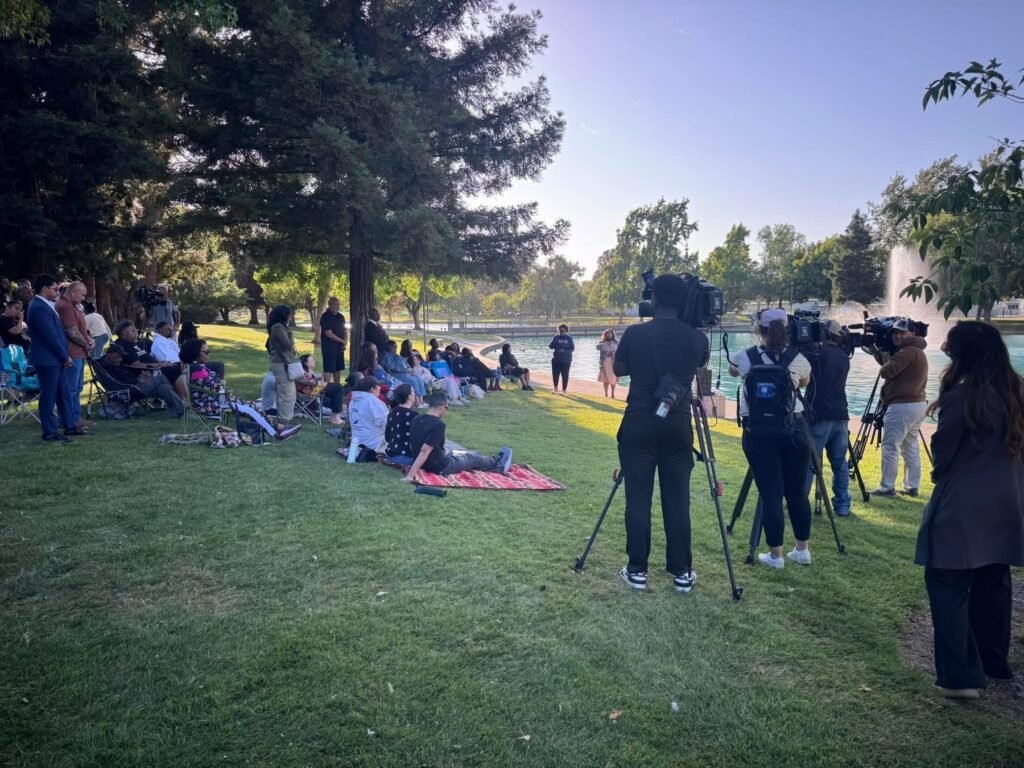
Fairfield knows what this looks like when it works. You can feel it at a block gathering, at a community healing circle by the pond, in the moments when our city decides to face something hard together instead of separately. I believe that feeling is worth protecting, and it’s worth asking who in local leadership is actively working to build it.
What the Research Actually Says
A randomized controlled trial across Australia, the UK, and the United States found that simple acts of kindness toward neighbors, like lending a hand or saying hello, reduce loneliness and improve wellbeing. The study found that knowing as few as six neighbors was enough to significantly improve outcomes for participants.
Six neighbors. Not a large social circle or a packed event calendar, just six people whose faces you recognize and whose names you know.
Research from Rutgers Institute for Health found that strong connections with neighbors reduced early death among people who live alone, with neighborhood cohesion acting as a genuine protective factor for older adults who might otherwise face isolation.
Cities and neighborhoods with strong social bonds show better mental and physical health outcomes, stronger community safety, and greater economic stability. When neighbors know and look out for one another, they step in when something looks wrong, report issues, and advocate for better infrastructure.
Why Fairfield Feels This Gap
Fairfield is a city in motion. Families move in and out. New developments bring residents who don’t yet know anyone on their street, and long-time residents feel the neighborhood changing around them without always knowing how to bridge the distance.
That constant movement creates pockets of isolation that don’t always look like isolation from the outside. A family can live on the same block for three years without a real conversation with anyone around them.
A Pew Research Center survey from March 2025 asked Americans about their relationship with neighbors and found significant gaps in trust and connection, with many residents unsure whether their neighbors would help them in a time of need or crisis.
That uncertainty makes people less likely to ask for help, less likely to offer it, and less likely to invest in the place they live. Over time it shows up in neglected public spaces, lower civic participation, and the slow erosion of the neighborhood identity that drew people here in the first place.
What Connection Actually Looks Like in Practice
Knowing your neighbors isn’t about being everyone’s best friend. It’s about the small, consistent acts that build trust over time: a wave from the driveway, picking up a package left on the porch, checking on an elderly neighbor after a heat wave, letting someone know about a community meeting that affects their street.
Research published in Nature Cities found that local peer-to-peer resource sharing dramatically reduces resource shortages during disasters, with neighbor-to-neighbor support emerging as one of the most effective and underutilized tools for community resilience.
When neighbors know each other, communities recover faster from hard events. They share information more quickly, look out for children and seniors, and notice when something is wrong and do something about it.
Research at Bowling Green State University found that people involved in community-based organizations reported higher life satisfaction, stronger wellbeing, and a greater sense of purpose, with benefits increasing the more responsibility and close contact with others they had.
How I’ve Built This in District 1
I didn’t come into office promising to build community and then retreat to City Hall. I’ve been out in District 1 consistently, at community meetings, at neighborhood events, and at gatherings that have nothing to do with any political calendar.
When I co-hosted the Community Healing Circle at Civic Center Pond after the recent violence in Fairfield, it wasn’t a campaign event. Our community needed someone to help hold space for grief and healing. I stood with Broken by Violence and Tri-City NAACP because I believe real community connection has to show up hardest in the hardest moments.
I co-founded Solano Impact Care to build the kind of personalized, relationship-centered support that helps people move through difficulty without doing it alone. I founded Hazel’s Tranquility Place to give formerly incarcerated women a genuine community to return to. Both exist because I saw the cost of disconnection up close and chose to do something real about it.
My show, Turning Point with K. Patrice Williams, has been a vehicle for exactly this kind of connection: honest conversations and real voices, the kind of dialogue that helps people feel seen and included in the conversation about their own community.
In Women in Local Government Fairfield CA, I wrote about how a leader’s presence is itself an act of community building. It shows District 1 what it looks like when someone with real skin in the game shows up and stays.
And as I shared in Supporting Immigrant Families: What Welcoming Communities Actually Do, building connection in Fairfield means making sure every resident, regardless of background, feels genuinely included in the life of this city. You don’t accomplish that with a policy vote. You build it through consistent, caring presence over time.
What a Second Term Means for Community Connection in District 1
This November, I’m asking for your vote so I can continue this work. I’d enter a second term with four years of relationships, of knowing which organizations are doing the real work, and of understanding where the isolation lives in Cordelia and Green Valley and what it takes to address it.
My second-term priorities for community connection include:
- Deepening partnerships with organizations already building trust at the neighborhood level
- Expanding community engagement beyond formal meetings into the everyday spaces where residents actually gather
- Supporting the kind of public programming that activates parks, plazas, and community centers as genuine gathering points rather than underused infrastructure
- Keeping the standard of transparency and accessibility that makes residents feel like City Hall belongs to them
None of this makes for dramatic headlines. But it’s the work that determines whether Fairfield feels like a real community or just a collection of households sharing a zip code.
Start Small. Start Now.
You don’t need to wait for an elected official to tell you to know your neighbors. Start with one. Learn one name on your block you don’t already know. Wave first. Introduce yourself. Check in.
Fairfield has everything it needs to be that kind of community: the diversity, the history, and the good people who chose this city and want to see it at its best. What it needs is leadership that keeps showing up to build those connections, and that’s the work I want to continue.
I’m asking for your vote on November 3.
Vote K. Patrice Williams for Fairfield City Council, District 1.
Learn more at electkpatricewilliams.com and connect with me on LinkedIn.
Frequently Asked Questions
1. Why does knowing your neighbors matter for community health?
Research shows that knowing as few as six neighbors significantly reduces loneliness, improves mental health, and builds the kind of trust that makes communities safer and more resilient.
2. How has K. Patrice Williams built community connection in District 1?
I’ve done it through consistent presence at community events, co-hosting healing gatherings, founding organizations like Solano Impact Care and Hazel’s Tranquility Place, and keeping an open, ongoing dialogue with residents between elections.
3. What does community connection have to do with public safety?
When neighbors know and trust each other, they look out for one another, report concerns, and create the kind of neighborhood cohesion that reduces crime and increases resilience during emergencies.
Election Day is November 3, 2026
Can I count on your vote?
Take the pledge, read my ballot statement in five languages, or join a Kitchen Table Ballot Talk.