
Inclusion isn’t a checkbox, a ramp added because a regulation required it, or a line in a policy document nobody reads after it passes. Real inclusion is the daily experience of every resident being able to move through their city with dignity, and to access the parks, services, businesses, public spaces, and government buildings that belong to all of us equally.
For too many residents with disabilities in Fairfield, that experience is still out of reach. It isn’t because people don’t care. It’s because disability access and inclusion in Fairfield CA hasn’t consistently had the champion it deserves at the council table.
I’m running for re-election to Fairfield City Council District 1 this November because I believe every resident of this city deserves to be fully included in its life, not partially and not only when it’s convenient. I’m bringing that commitment into a second term with the relationships, resources, and policy framework to make it happen.
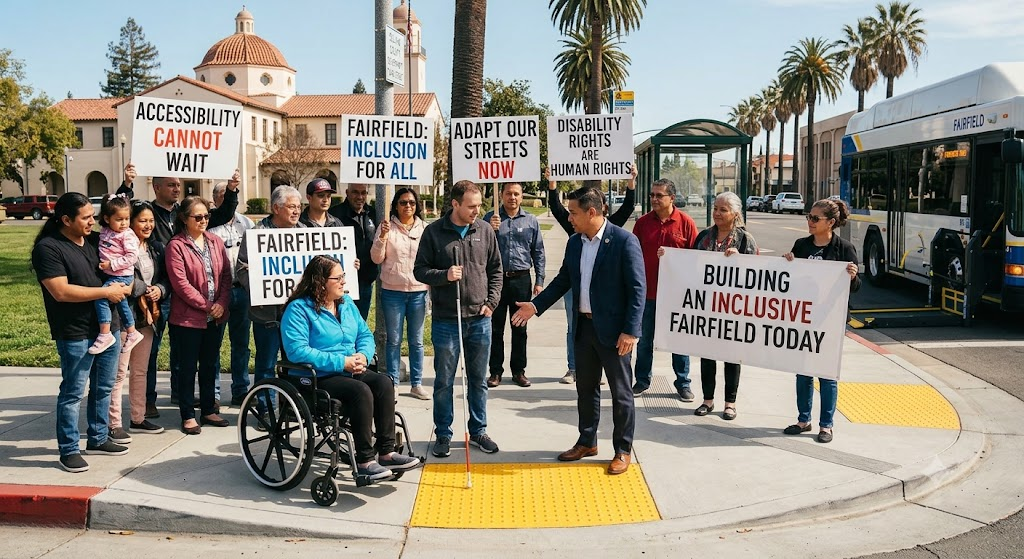
Why Disability Access and Inclusion in Fairfield CA Cannot Wait
According to the CDC, roughly one in four adults in the United States lives with some form of disability. In a city the size of Fairfield, that’s thousands of residents whose daily lives are shaped by whether our infrastructure, services, and public spaces are designed with them in mind.
Solano County has recognized the urgency, launching a Master Plan on Aging and Disability with a community kickoff meeting right here in Fairfield at the Solano County Events Center, focused on transportation access, healthcare equity, and inclusive community design.
That regional momentum matters, but regional plans only become real outcomes when local leaders drive implementation in their own communities. I see disability access as a genuine community priority, not a compliance exercise.
My legal training from San Francisco Law School gives me a deep understanding of the Americans with Disabilities Act, California’s Unruh Civil Rights Act, and the full scope of what cities are required to provide, and more importantly, what they should provide if they’re serious about inclusion. My background as a mother and community advocate gives me the human context that turns legal requirements into lived outcomes.
As I wrote in Fairfield City Council Transparency, I’ve always believed residents deserve more than the legal minimum. Disability access is where that belief matters most.
The Physical Reality: Sidewalks, Buildings, and Public Spaces
Start with the basics: can a person who uses a wheelchair, a walker, or a mobility aid actually get where they’re going without running into barriers that were never supposed to be there?
Cracked sidewalks. Missing curb cuts. Inaccessible park facilities. Public building entrances that technically meet code but create real obstacles for people with mobility challenges. These are daily frustrations for Fairfield residents who simply want to move through their city the way everyone else does.
Solano County already has ADA paratransit services through FAST, the Fairfield and Suisun Transit system, for residents who can’t use fixed local routes due to disability. But transportation is only one piece. Full access includes every touchpoint where a resident interacts with their city.
My infrastructure priorities for disability access include:
- Systematic ADA compliance audits of Fairfield’s public infrastructure, identifying the specific gaps in sidewalk accessibility, curb cuts, park facilities, and public building access that are most affecting residents with disabilities in District 1
- Prioritizing repairs and upgrades in Cordelia and Green Valley specifically, where aging infrastructure has created accessibility barriers that have been left unaddressed for too long
- Integrating universal design standards into every new development and infrastructure project the city approves, so that accessibility is built in from the start rather than retrofitted at greater cost later
- Improving accessible parking enforcement and expanding accessible parking availability near high-traffic public spaces, medical facilities, and city services
This connects directly to the priorities I laid out in Cordelia and Green Valley Infrastructure. Disability access is part of the same conversation as infrastructure investment, and it needs to be treated that way at every stage of planning.
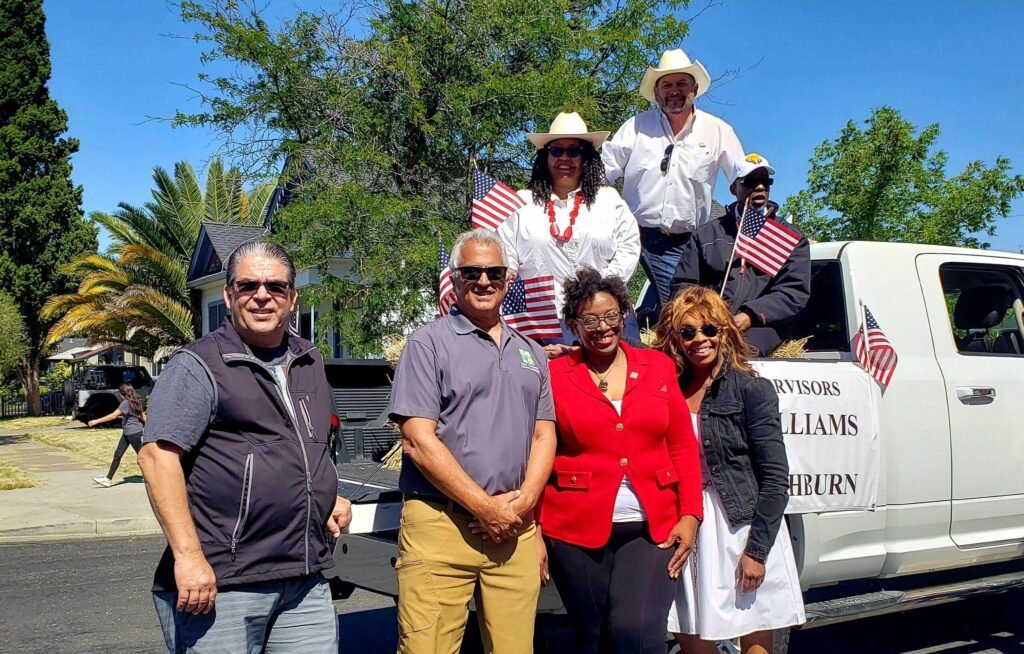
The Role of Community Partners: Spotlight on Solano Impact Care
Government can’t do this alone. The most meaningful progress on disability access has always come from partnership between city leadership and the community organizations that work directly with residents who need support. They have trust, expertise, and frontline knowledge that City Hall can’t replicate.
One of the most important partners in this work is Solano Impact Care, a community support organization I co-founded, dedicated to helping people overcome challenges through personalized care and meaningful connection.
Economic Inclusion: Employment and Small Business Access
Disability access is also an economic conversation. Adults with disabilities face significant barriers to employment, not because of their capabilities but because of structural obstacles workplaces and businesses haven’t always prioritized removing. In a city where small business support is a cornerstone of economic development, making Fairfield’s businesses accessible and inclusive is both a moral and a practical responsibility.
The California Commission on Disability Access has emphasized through its listening forums that local conversations with businesses about accessibility are essential, educating employers about both their legal obligations and the economic benefits of accessible workplaces and customer environments.
My approach builds on the small business framework I shared in Small Business Support in Fairfield CA:
- Providing accessibility resources to small business owners who want to improve their physical and digital accessibility but do not know where to start or how to afford it
- Connecting businesses with the California Commission on Disability Access and certified access specialists who can help them identify and address accessibility gaps before they become legal or reputational issues
- Advocating for inclusive hiring practices across city contractors and vendors, setting a standard that the city itself models in its own procurement and employment decisions
- Supporting job training and employment pathways for residents with disabilities through partnerships with the Solano County Department of Rehabilitation and workforce development programs that specifically address the barriers disabled job seekers face
A truly inclusive Fairfield economy is one where residents with disabilities are customers, employees, and business owners, not an afterthought.
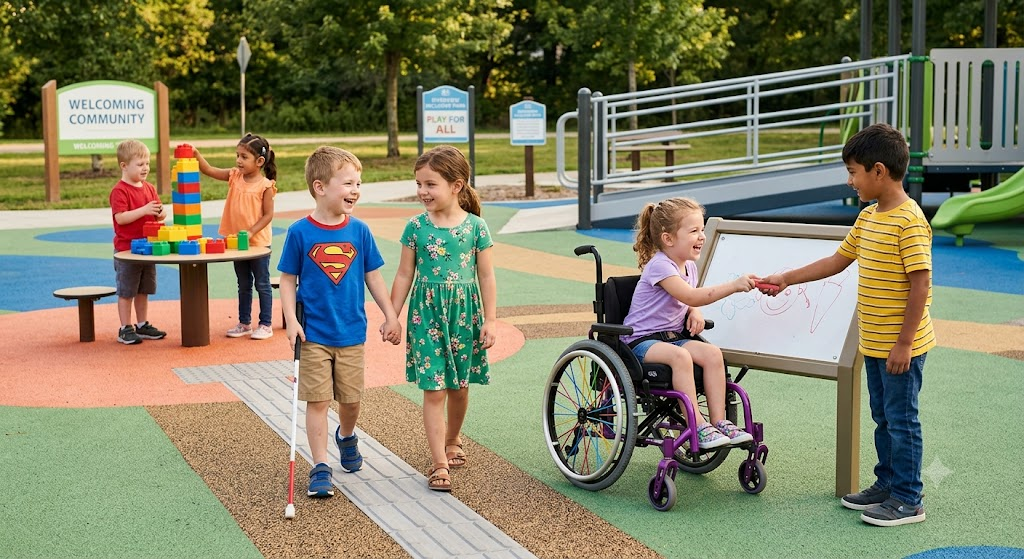
Youth and Families: Disability Inclusion Starting Early
Inclusion has to start young. Children with disabilities and their families navigate a complex landscape of educational services, therapeutic support, community programming, and social inclusion challenges that can feel overwhelming without the right support around them.
The State Council on Developmental Disabilities North Bay Regional Office in Fairfield ensures that individuals with developmental disabilities and their families participate in the planning, design, and receipt of services that promote independence, productivity, inclusion, and self-determination. Putting families at the center of planning, rather than treating them as passive recipients, is the model I champion at the city level.
My priorities for youth and family disability inclusion:
- Ensuring that Fairfield’s parks and recreation programs are genuinely accessible to children with disabilities, with adaptive equipment, inclusive programming, and staff trained to support children with a range of needs
- Supporting early intervention and family navigation services that connect families of children with disabilities to the resources they need before challenges compound
- Advocating for inclusive school environments in partnership with Fairfield Unified School District and the Solano County SELPA, because every child in Fairfield deserves a school experience that honors their full potential
- Creating sensory-friendly community spaces and events that allow families with children who have sensory processing differences to participate in city life without the barriers that standard public spaces often present
This connects naturally to the priorities in Youth Programs in Solano County. Disability inclusion is part of the same commitment to making sure every young person in Fairfield has what they need to thrive.
The Path Forward: What a Second Term Delivers
Disability access requires sustained, consistent leadership. It won’t be solved with one vote or one initiative. It takes a council member who shows up for it year after year, builds partnerships with organizations like Solano Impact Care that make coordinated care possible, and holds the city accountable for following through on its commitments to every resident.
In a second term, I’m committed to:
- Establishing a District 1 Disability Access Advisory Committee made up of residents with disabilities, family caregivers, service providers, and advocates who provide ongoing input into city decisions and hold leadership accountable for progress
- Developing a public-facing disability access improvement tracker so residents can see exactly what the city has committed to, what has been completed, and what is still in progress
- Pursuing state and federal funding specifically designated for ADA compliance, accessible infrastructure, and disability services to bring additional resources into Fairfield beyond what the city budget alone can provide
- Championing disability inclusion in every policy conversation, from housing to economic development to public safety, because the needs of residents with disabilities do not fit neatly into one policy category and neither should the advocacy on their behalf
Disability access isn’t a special interest. It’s a community responsibility, and the measure of whether Fairfield is truly a city where every resident can participate fully in the life of their community.
Final Thoughts
Residents of Fairfield who live with disabilities aren’t asking for special treatment. They’re asking for what every resident deserves: safe sidewalks, accessible parks, inclusive workplaces, community services that actually reach them, and a city government that sees them, hears them, and makes decisions with their needs at the table.
I believe that kind of city is possible, and I’ve spent four years building the relationships, knowledge, and track record to help make it real. I’m asking for your vote on November 3 so I can keep fighting for every resident, including those whose needs have gone unmet for too long.
Vote K. Patrice Williams for Fairfield City Council, District 1, this November.
Learn more at electkpatricewilliams.com and connect with me on LinkedIn. To learn more about community support services for residents with disabilities in Solano County, visit Solano Impact Care.
Frequently Asked Questions
1. What is K. Patrice Williams doing specifically for disability access and inclusion in Fairfield CA?
I’m advocating for ADA compliance audits, accessible infrastructure investment in District 1, stronger partnerships with organizations like Solano Impact Care, and a disability access advisory committee that keeps residents with disabilities at the center of city decision-making.
2. How does Solano Impact Care support residents with disabilities in Fairfield?
Solano Impact Care provides personalized care and community connection services that help individuals overcome challenges and live fuller, more connected lives in Solano County.
3. How does disability inclusion connect to Fairfield’s economic development goals?
An inclusive economy where residents with disabilities can work, shop, and do business is a stronger economy overall, and I’m committed to making sure Fairfield’s small businesses have the resources to become genuinely accessible.
Election Day is November 3, 2026
Can I count on your vote?
Take the pledge, read my ballot statement in five languages, or join a Kitchen Table Ballot Talk.